 Skip to content

A typical home EV charger installation quote in the UK commonly falls within a moderate range for a standard supplied-and-fitted 7kW smart charger. If you qualify for the OZEV Electric Vehicle Chargepoint Grant, that figure drops by up to £500 from 1 April 2026. Complex jobs — long cable runs, consumer unit upgrades, groundworks — push costs higher. Here is what to know before you request a quote:
- Typical cost band: £800–£1,200 supplied and fitted for a straightforward domestic 7kW install
- Grant impact: Eligible renters and flat owners can claim a substantial grant per socket via an OZEV-authorised installer
- Complex jobs: Consumer unit upgrades, long runs, or earthing work can take costs to £1,500 or beyond
- Quickest route to a fixed price: Send your postcode, a photo of your consumer unit and meter, and your parking location to get an accurate, itemised quote from Centralec-electrical
Table of Contents
- What does a standard EV charger installation quote include?
- Typical UK costs and a sample line-item quote
- What actually changes the price on your quote?
- Does the OZEV grant change your net cost?
- How to get a reliable, comparable quote
- Accreditations, guarantees, and red flags to watch for
- How Centralec-electrical handles quotes
- What payment terms do installers typically offer?
- Key takeaways
- Why transparent quotes matter more than people realise
- Centralec-electrical: fixed-price EV charger installs across the South West
- Useful sources
What does a standard EV charger installation quote include?
A legitimate quote should break every cost out clearly, not present a single opaque figure. When you receive a quote, check it covers all of the following.
Core inclusions on any proper quote:
- The wallbox charger unit (Wallbox Pulsar Plus, MyEnergi Zappi, Pod Point Solo, or Tesla Wall Connector are common choices)
- Labour for the full installation
- Cabling from the consumer unit to the charger location (typically up to 10 metres)
- Wall or post mounting hardware
- Commissioning and testing
- Electrical Installation Certificate (EIC) and any required notifications
Items often priced separately — check whether these apply to you:
- Consumer unit upgrade or additional circuit breaker
- Cable runs beyond the standard length
- Additional earthing work (see the PME/TT point in the cost drivers section below)
- DNO (Distribution Network Operator) application or service upgrade
- Making good after surface chasing or brickwork penetration
- Groundworks for underground cable routes
Testing, certification, and notification paperwork should be included in any properly scoped quote — not treated as an optional extra. If a quote omits them, ask explicitly before signing anything.
Typical UK costs and a sample line-item quote
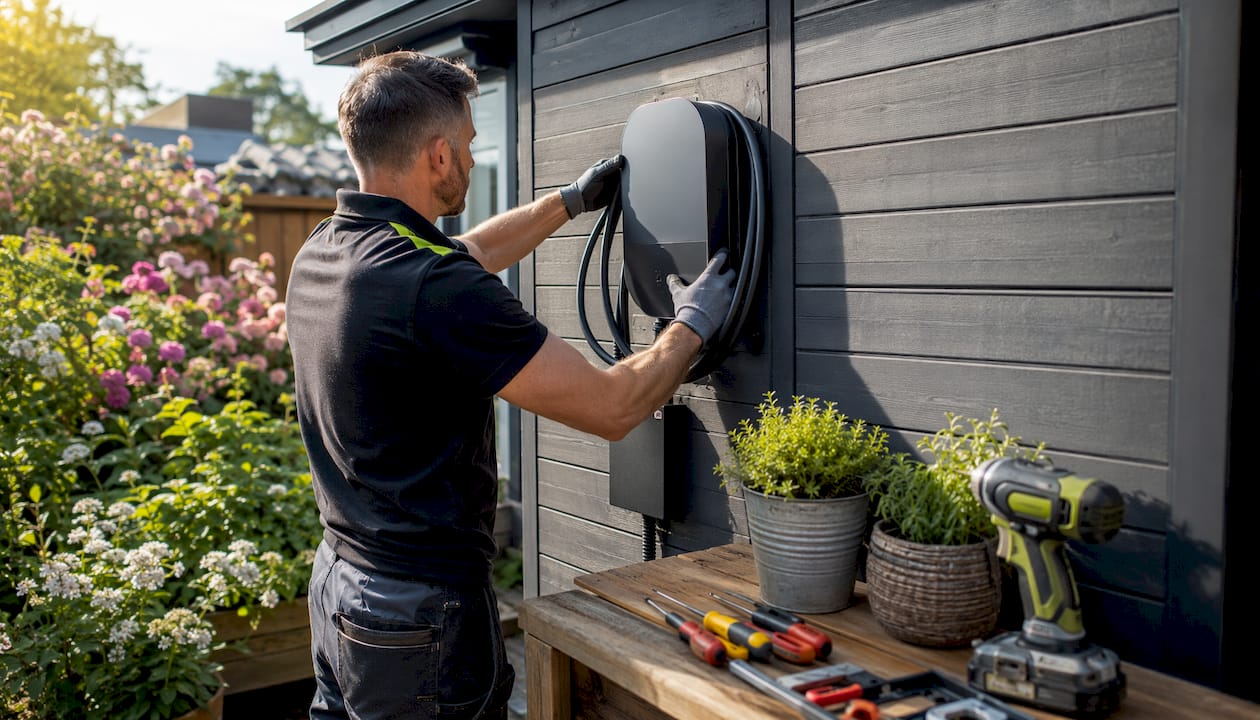
Most domestic 7kW installs typically fall within a moderate price range including the charger, labour, testing, and certification. Mid-range smart chargers (£400–£700 for the unit alone) tend to offer the best value for most homeowners. More complex scenarios push the total higher.
| Scenario | Typical cost band | Main cost driver |
|---|---|---|
| Standard 7kW, short cable run | a moderate price range | Charger unit + labour |
| Smart/solar-integrated 7kW | a higher price range | Higher-spec unit, programming |
| Long cable run or surface chase | a higher price range | Extra cable, labour, making good |
| Consumer unit upgrade required | an increased price range | Additional electrical work |
| Three-phase or commercial install | a significantly higher price range | Specialist equipment and labour |
Sample itemised quote (domestic 7kW, straightforward install):
| Line item | Typical cost |
|---|---|
| Wallbox charger unit (e.g. Wallbox Pulsar Plus) | a typical price range |
| Labour (supply, fit, commission) | a typical price range |
| Cabling and containment (up to 10m) | a typical price range |
| Mounting hardware | a typical price range |
| Testing and EIC certificate | a typical price range |
| Total | £800–£1,170 |
For a deeper breakdown of what drives each line, the EV charger installation cost guide on the Centralec-electrical site walks through each element.
What actually changes the price on your quote?
Quote accuracy depends heavily on the site information the installer receives before pricing. These are the factors that move a quote most:
- Cable run length and route: Every extra metre of cable adds material and labour cost. A garage on the far side of the property from the consumer unit is a different job from a driveway directly outside the utility room.
- Consumer unit capacity: If your board has no spare ways, the installer must add a new circuit or upgrade the unit entirely. That alone can add £300–£600.
- Earthing and supply type: Properties on a PME (TN-C-S) supply may require a TT earth electrode arrangement for the EV circuit. This is a common cause of mid-quote price increases after a site visit.
- DNO works or service upgrade: If your incoming supply needs upgrading to support a charger, the DNO application process adds both cost and time.
- Surface and groundworks: Chasing cables into walls or running them underground adds labour and reinstatement costs.
- Tethered vs untethered unit: Tethered chargers (cable attached) are slightly cheaper; untethered units offer more flexibility but cost a little more.
- Smart features and solar integration: A smart EV charger that talks to your solar panels or time-of-use tariff costs more upfront but often pays back through cheaper charging.
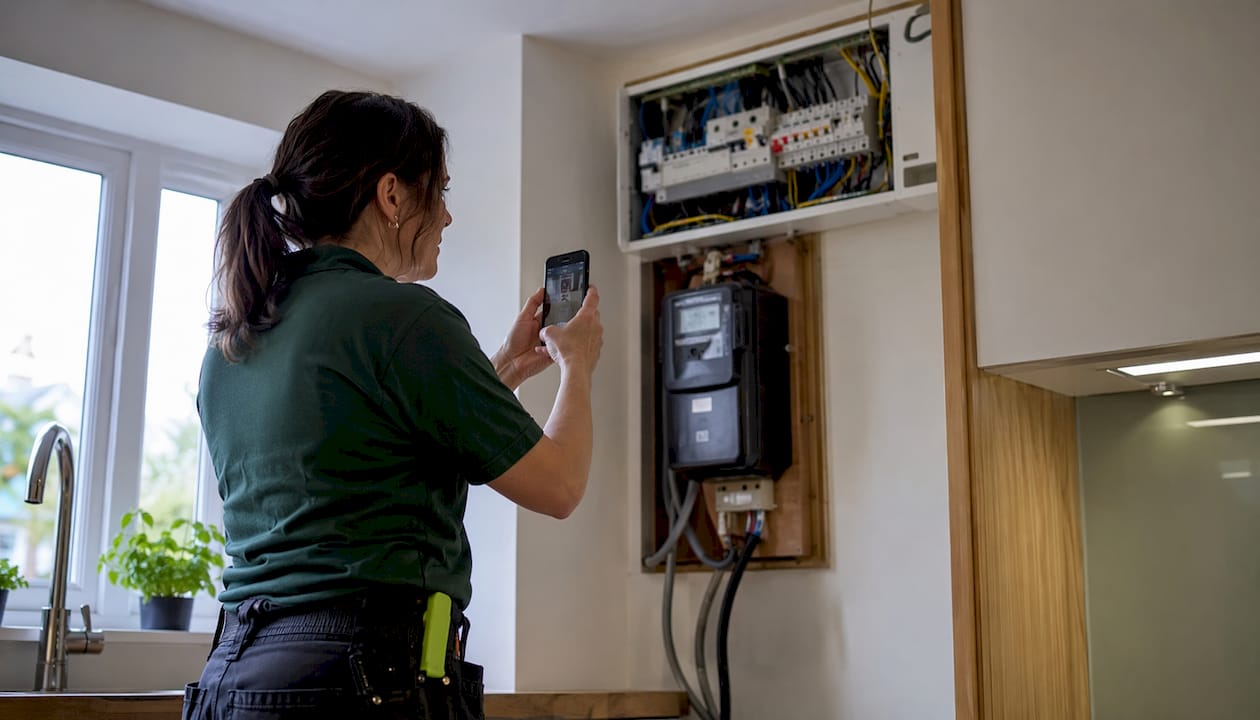
Pro Tip: Before contacting any installer, photograph your consumer unit, your electricity meter, and the proposed charger location. Include a rough measurement from the consumer unit to where the charger will sit. Installers who have this information can give you a far more accurate provisional quote without a paid site visit.
Does the OZEV grant change your net cost?
Yes, materially. The Electric Vehicle Chargepoint Grant for renters and flat owners contributes towards the purchase and installation of a chargepoint, provided you use an OZEV-authorised installer and have dedicated off-street parking.
Grant update: From 1 April 2026, the maximum grant per socket increased to £500 (up from £350). This is a time-limited scheme, so the current cap applies only while the scheme remains open under current rules.
The grant covers up to 75% of the cost, capped at £500 per socket. The installer claims it on your behalf, so your upfront payment is already reduced. Eligibility conditions are strict: you must be a renter or flat owner (not a homeowner in a house), have dedicated off-street parking, and use an installer on the OZEV-authorised list.
Pro Tip: If you are borderline on timing, booking after 1 April 2026 locks in the £500 cap rather than the previous £350. Confirm with your installer that they are OZEV-authorised before committing, since the grant is only claimable through authorised businesses.
How to get a reliable, comparable quote
Giving an installer complete information upfront is the single biggest factor in getting a quote that holds firm on installation day. Follow this checklist:
- Confirm your parking situation — off-street, driveway, garage, or communal car park, and whether you own or rent.
- Photograph your consumer unit — show the make, number of spare ways, and any existing RCDs or MCBs.
- Photograph your electricity meter — the installer needs to see the supply type and meter location.
- Measure the cable route — approximate distance from consumer unit to the charger location, noting any walls, floors, or external surfaces the cable must cross.
- Note your vehicle model — some chargers are better matched to specific cars; a Tesla Wall Connector, for instance, is optimised for Tesla vehicles.
- Confirm solar or smart meter — if you have solar panels or a smart meter, say so; it affects which charger the installer will recommend.
- Ask about grant eligibility — confirm whether you qualify and whether the installer will handle the claim.
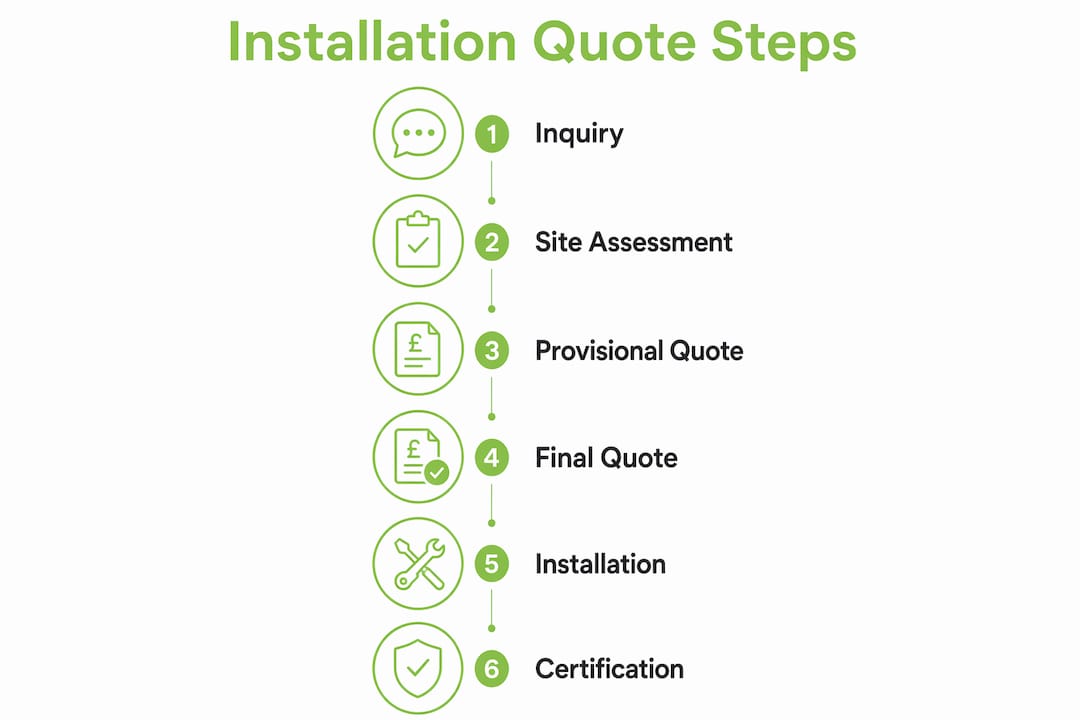
Once you submit this information, a typical process runs: remote photo assessment → provisional quote (usually within 24–48 hours) → on-site survey if the job is complex → fixed itemised quote → booking. Most installs complete within 1–3 weeks of the initial enquiry, with the physical fit taking around half a day for a straightforward job.
For a full breakdown of what installers need to assess, the EV charger installation requirements page covers the technical checklist in detail.
Accreditations, guarantees, and red flags to watch for
Positive trust signals — look for all of these:
- NICEIC-approved contractor status (or equivalent competent person scheme membership)
- OZEV-authorised installer registration (verifiable on the GOV.UK installer list)
- Written, itemised quote with no single-line totals
- Testing and EIC certification included in the quoted price
- Clear warranty on both parts and workmanship
- Aftercare contact and commissioning paperwork provided on completion
Red flags that should prompt further questions:
- Verbal-only quote with no written breakdown
- Very low headline price with no itemisation (often a sign of scope exclusions)
- Installer unwilling to show NICEIC or OZEV credentials
- No mention of an EIC certificate or testing
- No warranty detail or vague “we’ll sort it” aftercare
When the job is complete, you should receive an Electrical Installation Certificate, commissioning paperwork for the charger, and confirmation of any grant claim submitted. If an installer cannot confirm these in advance, that is reason enough to get a second quote. For context on why professional certification matters, the professional installation guide explains the compliance requirements clearly.
How Centralec-electrical handles quotes
Centralec-electrical’s process is built around removing the guesswork. NICEIC-approved electricians with over 23 years of experience carry out every install, and the quote process starts with a remote photo assessment so you get a fixed, itemised price before anyone visits your property.
Sample Centralec-electrical quote structure:
| Line item | Included |
|---|---|
| Charger unit (Wallbox, Zappi, Pod Point, or Tesla) | Yes |
| Labour, commissioning, and testing | Yes |
| EIC certificate and paperwork | Yes |
| OZEV grant application (where eligible) | Yes |
| Fixed price — no hidden costs | Yes |
Trust signals:
- NICEIC-approved, fully insured electricians
- OZEV-authorised installer status for grant-eligible customers
- Satisfaction guarantee on all completed work
- Transparent, itemised quotes with no opaque single-line totals
- South West coverage with 24/7 availability
Centralec-electrical installs Wallbox, MyEnergi Zappi, Pod Point, and Tesla Wall Connector units, and handles the OZEV grant claim on your behalf where you qualify.
What payment terms do installers typically offer?
Most reputable EV charger installers in the UK ask for a deposit on booking, with the balance due on completion. A typical split is 25–50% upfront and the remainder once the job is signed off and certified. Some installers offer staged payments for larger or more complex jobs.
Credit and debit card payment is standard. A small number of installers offer finance options for higher-value installs, though this is less common for domestic charger work than for larger electrical projects. Always confirm payment terms in writing before booking, and be cautious of any installer who asks for full payment upfront before work begins. That is not standard practice and removes your leverage if the work is unsatisfactory.
Key takeaways
A home EV charger installation in the UK typically costs £800–£1,200 supplied and fitted, with OZEV grants cutting up to £500 for eligible renters and flat owners from 1 April 2026.
| Point | Details |
|---|---|
| Expected cost band | Most 7kW domestic installs fall between £800 and £1,200 including charger, labour, and certification. |
| Provide photos and postcode | Sending meter, consumer unit, and parking photos gets you a far more accurate provisional quote. |
| Ask for itemised quotes | Any quote missing line items for testing, certification, or cabling should prompt follow-up questions. |
| Check OZEV eligibility | Renters and flat owners with off-street parking may qualify for up to £500 per socket from 1 April 2026. |
| Centralec-electrical | NICEIC-approved, OZEV-authorised, and offering fixed upfront pricing with no hidden costs across the South West. |
Why transparent quotes matter more than people realise
The thing most homeowners underestimate about getting an EV charger installed is not the cost itself — it is the gap between a headline price and what actually gets delivered. A quote that looks £200 cheaper than the next one often excludes the EIC certificate, the earthing work, or the making-good after cable chasing. By the time those are added, the “cheaper” installer costs more.
Itemised quotes are not just a nicety. They are the only way to compare two quotes honestly. If one installer includes testing and certification and another does not, you are not comparing the same job. The same logic applies to grant handling: an OZEV-authorised installer who claims the grant on your behalf is doing something of real value, and that should be reflected in how you weigh the total.
The South West has no shortage of electricians willing to quote for EV charger work. The ones worth hiring are the ones who can tell you exactly what is in the price before they start.
Centralec-electrical: fixed-price EV charger installs across the South West
If you want a fixed, itemised quote with no surprises, Centralec-electrical offers exactly that. NICEIC-approved electricians, OZEV-authorised installer status, and over 23 years of experience mean the quote you receive is the price you pay. The team handles Wallbox, MyEnergi Zappi, Pod Point, and Tesla Wall Connector installations, and manages the OZEV grant application on your behalf where you qualify.
To get started, head to the EV charger installation cost page or contact Centralec-electrical directly via the main services page. Have your postcode, a photo of your consumer unit, and your parking details ready — that is all the team needs to give you a firm, itemised quote, usually within 24–48 hours.
Useful sources
- GOV.UK: Electric Vehicle Chargepoint Installers — official register of OZEV-authorised installers
- GOV.UK: Changes to EV Chargepoint Grant Schemes from 1 April 2026 — current grant rates and scheme rules
- GOV.UK: Electric Vehicle Chargepoint Grant for Renters and Flat Owners — eligibility criteria and how to apply