 Skip to content
Smart EV charger installation is the process of fitting a dedicated home charging unit that connects to your electrical panel, communicates with your vehicle, and manages energy use automatically. Done correctly, it cuts overnight charging times, reduces electricity costs, and adds genuine value to your property. Done poorly, it creates fire risks, voids your insurance, and fails building inspections. This guide covers everything a UK homeowner needs: panel assessment, charger selection, the installation process step by step, and what to do when things go wrong.
What does smart EV charger installation actually involve?
A smart EV charger, known in the industry as a Level 2 EVSE (Electric Vehicle Supply Equipment), delivers 240V AC power through a dedicated circuit. This is fundamentally different from plugging into a standard 13A socket. The installation requires a dedicated 240V circuit, typically protected by a 40A or 50A breaker, and either a hardwired connection or a plug-in configuration using a NEMA 14-50 outlet.
The key prerequisites are straightforward. Your home electrical panel must have sufficient spare capacity. You need a permit in virtually every UK jurisdiction. A licensed electrician must carry out or supervise the work. Centralec-electrical, a NICEIC-approved contractor with over 23 years of experience in the South West, handles all three of these requirements as part of a single managed installation.
How do you assess your home electrical system?
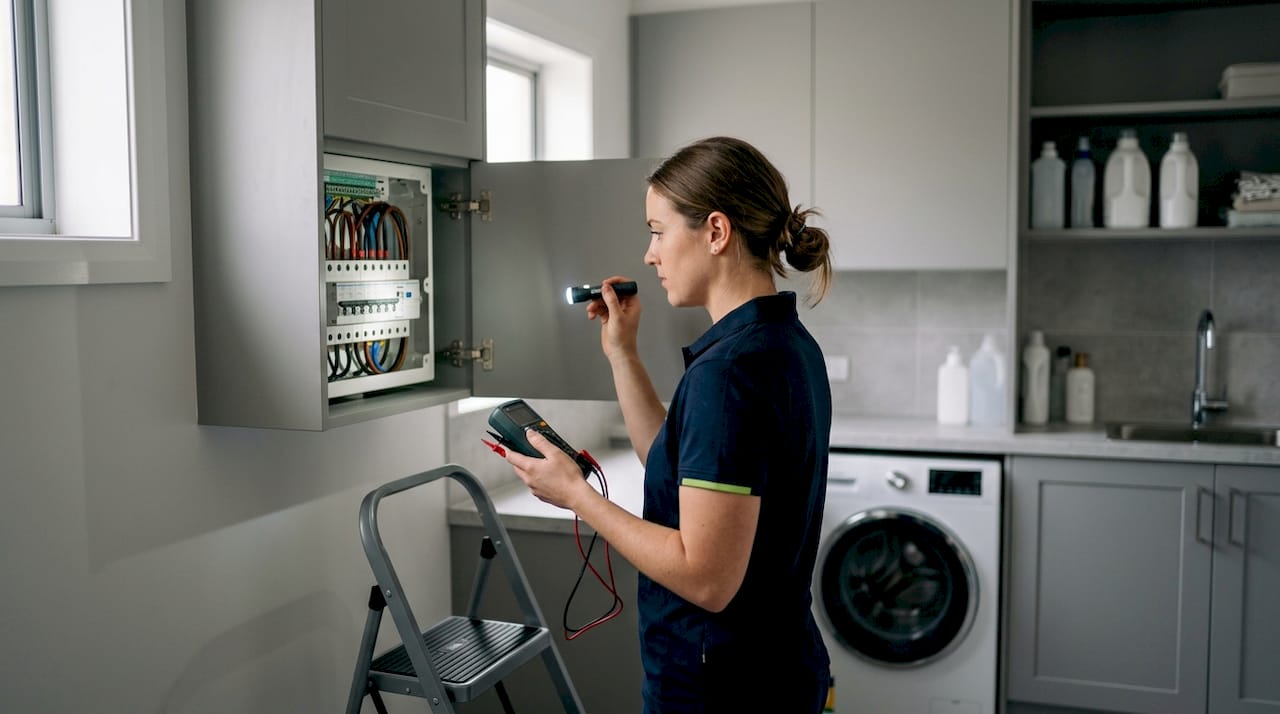
Your consumer unit is the starting point for any home EV charger setup. A load calculation per NEC 220.82 standards verifies whether your existing panel can absorb the additional draw without tripping or overheating. Many contractors skip this calculation and recommend a full panel upgrade immediately. That advice often costs homeowners money they do not need to spend.
The key indicators to check are your main service rating, the number of available breaker slots, and your current peak load. A typical UK home with a 100A service can usually accommodate a 32A EV charger without any panel work. Homes with older 60A services or fully occupied consumer units will likely need an upgrade before installation begins.
Pro Tip: Ask your electrician to show you the load calculation in writing before agreeing to any panel upgrade. Accurate load calculations prevent unnecessary and costly electrical panel upgrades.
| Panel situation | Likely action | Approximate cost |
|---|---|---|
| 100A service with spare slots | Direct charger installation | £850–£1,500 |
| 100A service, no spare slots | Sub-panel or tandem breaker | £1,000–£1,800 |
| 60A or older service | Full consumer unit upgrade | £1,350–£2,700 |
| Outdated earthing or wiring | Earthing adjustment required | Add £200–£500 |
Smart EV charger installation costs in the UK range from £850 to £1,500 for standard setups. Complex cases involving consumer unit upgrades or earthing work rise to £1,350–£2,700. Knowing your panel situation before you call an electrician puts you in a much stronger negotiating position.
How do you choose the right charger and location?
Charger selection comes down to two decisions: hardwired or plug-in, and how many amps you actually need. Hardwired installations support up to 48A continuous output and are more reliable over time. Plug-in configurations using an industrial-grade outlet are easier to remove but are limited to 40A and require hospital-grade or industrial-grade receptacles. Cheaper home-centre outlets fail under the continuous heat and mechanical stress of daily EV charging.
Match the charger’s output to your vehicle’s onboard charging capability. Fitting a 48A charger to a car with a 7.2kW onboard charger wastes money on hardware and installation. A 32A unit delivers the same real-world result at lower cost.
Location matters as much as amperage. The distance from your panel to the charger is the single largest cost variable after the panel itself. Long wire runs add £500–£1,200 in materials and labour. Placing the charger on the wall nearest your consumer unit keeps costs down and reduces voltage drop across the circuit.
Key criteria for charger and location selection:
- Amperage match: Choose a charger rated to your vehicle’s maximum onboard charging speed.
- Hardwired vs plug-in: Hardwired units offer greater reliability and long-term savings.
- Wi-Fi and load balancing: A smart charger with dynamic load balancing avoids expensive panel upgrades by managing total household load automatically.
- Weather protection: Outdoor units need an IP54 rating or higher for UK conditions.
- Cable length: Keep the charger within 5 metres of the panel where possible to minimise wiring costs.
- Future-proofing: Choose a unit with over-the-air firmware updates so the charger stays compatible with future tariffs and grid standards.
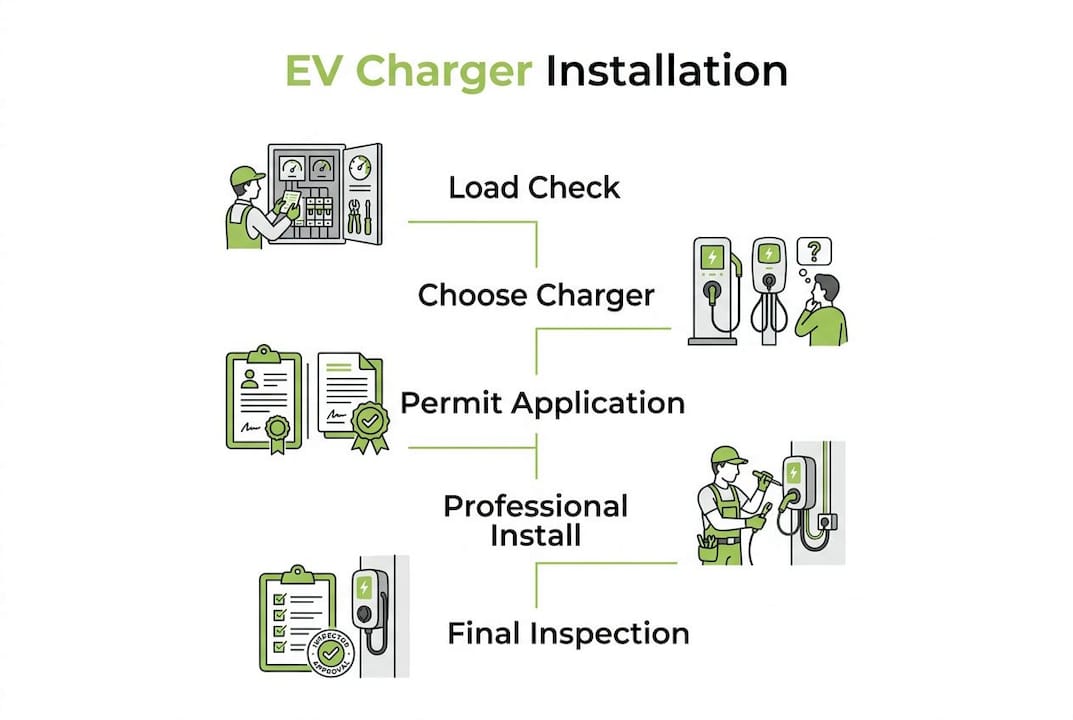
Step-by-step guide to installing a smart EV charger
A professional installation follows a clear sequence. Skipping any step creates safety risks or causes the installation to fail its inspection.
- Confirm panel capacity. Complete a load calculation before ordering any equipment.
- Select your charger and location. Finalise amperage, mounting position, and cable route.
- Apply for a permit. Permits are required in nearly all UK jurisdictions. Fees typically range from £50 to £200. Your electrician handles this application.
- Isolate the power. The electrician shuts off the main supply before any work begins.
- Install the breaker. A dedicated 40A or 50A breaker is fitted in the consumer unit.
- Run the cable. The electrician routes the appropriate gauge cable from the panel to the mounting location. Undersized wire is the most common DIY mistake and a serious fire hazard.
- Mount the charger. The unit is fixed to the wall at the correct height and orientation.
- Connect to the panel. All connections are made with the supply isolated and verified with a multimeter before power is restored.
- Restore power and test. The charger is powered up, connected to Wi-Fi, and tested with the vehicle.
- Pass inspection. The local authority or NICEIC-registered inspector signs off the installation.
Pro Tip: Never skip the permit stage. Proper permitting is critical for insurance validity and smooth home resale. An unpermitted installation can invalidate your home insurance and complicate any future property sale.
| Approach | Cost range | Safety | Permit handled | Recommended? |
|---|---|---|---|---|
| Licensed electrician | £850–£2,700 | Full compliance | Yes | Yes |
| DIY (experienced only) | £300–£800 | High risk | Owner’s responsibility | No |
DIY installation may be feasible for experienced individuals, but it is not recommended. Licensed electricians handle code compliance, permit applications, and inspection coordination. The cost saving rarely justifies the risk.
Troubleshooting common installation challenges
Most installation problems fall into three categories: panel capacity miscalculations, excessive wire run length, and outlet failures on plug-in setups.
Panel capacity errors occur when a contractor recommends an upgrade without completing a proper load calculation. If your electrician cannot show you the numbers, request an independent assessment before committing to expensive consumer unit work. Wire run length affects both cost and performance. Runs longer than 15 metres introduce voltage drop that reduces charging speed and generates heat in the cable. Rerouting the cable or relocating the charger is almost always cheaper than accepting a long run.
For plug-in installations, use only industrial-grade outlets. Standard home-centre receptacles fail under the continuous load of overnight EV charging. The failure mode is typically heat damage to the outlet and plug, which creates a fire risk.
Maintenance after installation is straightforward but worth scheduling:
- Monthly: Check the cable and connector for signs of heat damage or wear.
- Quarterly: Review the charger’s app data for any error codes or charging interruptions.
- Annually: Have a qualified electrician inspect the breaker, connections, and earthing.
- As released: Apply firmware updates through the charger’s app to maintain compatibility with smart tariffs.
Pro Tip: Place the charger as close to the consumer unit as the garage or driveway layout allows. Every metre of cable you eliminate saves money on materials and reduces the chance of voltage drop affecting charging speed.
Key takeaways
Smart EV charger installation succeeds when you complete a load calculation first, choose a charger matched to your vehicle, place it close to the panel, and use a licensed electrician who handles the permit and inspection.
| Point | Details |
|---|---|
| Load calculation first | Verify panel capacity before ordering equipment to avoid unnecessary upgrade costs. |
| Match charger to vehicle | Choose amperage based on your car’s onboard charging limit, not the maximum available. |
| Location cuts costs | Placing the charger near the consumer unit reduces cable costs by up to £1,200. |
| Permits are non-negotiable | Unpermitted work invalidates home insurance and complicates property sales. |
| Hardwired beats plug-in | Hardwired installations offer greater reliability and long-term savings over plug-in alternatives. |
What I’ve learned after 23 years of EV charger installations
The single biggest mistake I see homeowners make is agreeing to a consumer unit upgrade before anyone has done the load calculation. I have walked into jobs where a previous quote recommended a full panel replacement, and the actual load calculation showed the existing 100A service had plenty of headroom. That is a £1,000 difference in some cases, and it happens more often than it should.
The second thing I would stress is future-proofing. The UK grid is changing fast. Smart tariffs like Octopus Agile already reward EV owners who charge at off-peak times, but only if the charger has Wi-Fi and the firmware to support it. Fitting a basic unit today to save £150 often means replacing it within three years. Buy the unit with load balancing and over-the-air updates, and it will still be relevant when the next generation of tariffs arrives.
Permits are not optional, and I say that not to sound cautious but because I have seen what happens when they are skipped. A homeowner in Somerset had an unpermitted installation flagged during a property survey. The sale fell through. The cost of doing it properly the first time was a fraction of what that delay cost them. Work with a NICEIC-approved contractor and the permit, inspection, and sign-off are handled as part of the job.
— Craig
Centralec-electrical: professional EV charger installation in the South West
Centralec-electrical is a NICEIC-approved electrical contractor with over 23 years of experience fitting EV chargers in homes across the South West. Every installation includes a full load calculation, permit application, and post-installation inspection sign-off with no hidden costs.
Whether you need a straightforward home charger installation or a more complex setup involving a consumer unit upgrade, Centralec-electrical provides a fixed-price quote before any work begins. The team also advises on available installation rebates that can reduce your upfront cost. Contact Centralec-electrical to book a panel assessment and get a clear, transparent quote for your installation.
FAQ
How much does a smart EV charger installation cost in the UK?
Standard installations cost £850–£1,500. Complex cases involving consumer unit upgrades or long cable runs rise to £1,350–£2,700.
Do I need a permit to install a home EV charger?
Yes. Permits are required in nearly all UK jurisdictions, and a licensed electrician will handle the application and inspection as part of the installation.
Can I install a smart EV charger myself?
DIY installation is not recommended. Licensed electricians handle code compliance, permit applications, and inspection coordination, which a DIY approach leaves entirely to the homeowner at significant safety and legal risk.
What is the difference between a hardwired and plug-in EV charger?
Hardwired chargers support up to 48A continuous output and are more reliable long-term. Plug-in units using an industrial-grade outlet are limited to 40A and easier to remove, but require higher-quality receptacles to avoid failure under continuous load.
How do I know if my electrical panel can support an EV charger?
A load calculation based on your current peak usage and main service rating will confirm available capacity. Many 100A services in UK homes can support a 32A charger without any panel upgrade.