 Skip to content
A standard domestic EICR (Electrical Installation Condition Report) in the UK usually costs a moderate amount depending on property size and location. For landlords, the legal position is straightforward: private rented properties in England require an EICR every five years, and failure to comply carries real financial consequences.
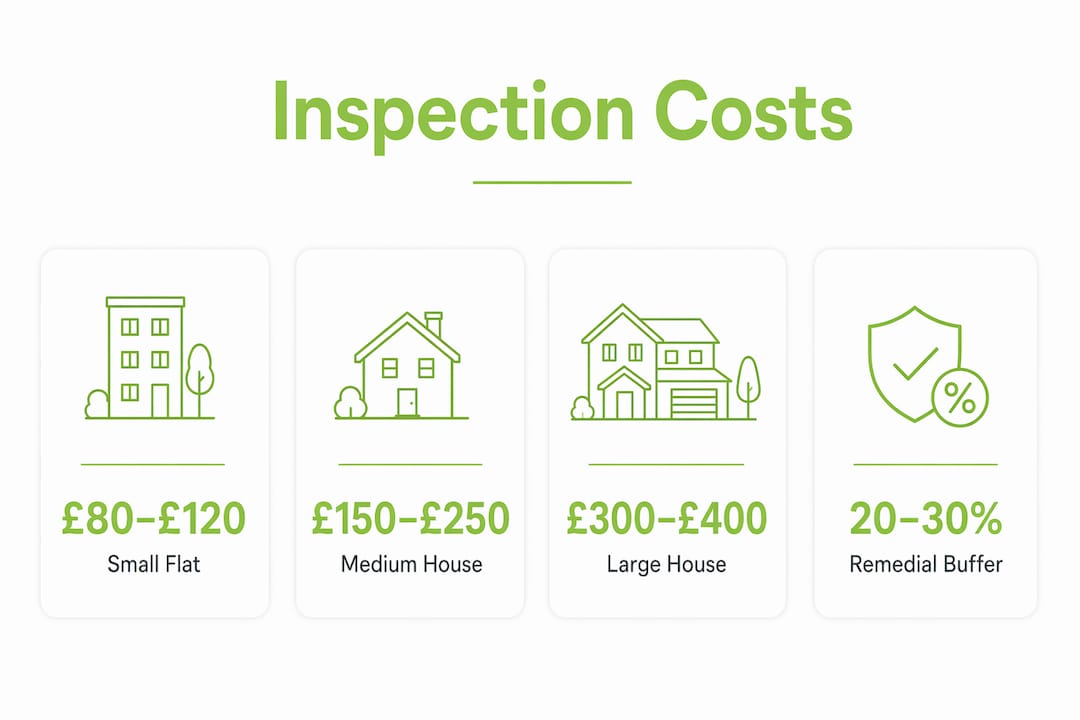
Quick benchmarks to set your budget vary by property size from smaller flats to larger houses; these cover the inspection itself. If the report flags remedial work, that is a separate cost entirely, and it can dwarf the inspection fee.
Pro Tip: Budget at least 20–30% on top of the inspection quote for potential remedial work, especially in properties built before 1990 or those that have not been inspected in over a decade.
Table of Contents
- How much does an electrical safety inspection cost by property size?
- What does an EICR actually check, and what do you get?
- What do condition codes C1, C2, C3, and FI mean?
- What drives the cost of an electrical inspection up or down?
- What are the landlord legal requirements for electrical inspections?
- How long does an electrical inspection take?
- Who should carry out your electrical inspection?
- What do common remedial works cost after an EICR?
- How to get reliable quotes and spot red flags
- Key takeaways
- Why accreditation and transparent pricing actually matter
- Centralec-electrical: fixed-price EICRs with no surprises
- Useful sources and further reading
How much does an electrical safety inspection cost by property size?
The typical UK price band for a domestic EICR sits between £80 and £400, with regional variation pulling that range in both directions. London and the South East consistently attract a premium of 20–30% above the national median, while rural areas in Wales, the North, and the South West tend to sit at the lower end.

| Property type | Typical low | Typical mid | Typical high |
|---|---|---|---|
| 1-bed flat | £80 | £120 | £200 |
| 2-bed flat | £90 | £140 | £220 |
| 2-bed house | £100 | £160 | £250 |
| 3-bed house | £120 | £180 | £280 |
| 4-bed house | £140 | £200 | £350 |
| 5+ bed house | £180 | £220 | £400+ |
VAT applies to most electrician invoices, and additional call-out fees may also be charged, so confirm details with your provider. Some contractors bundle these into a flat rate; others itemise them separately, so always ask.
London and major city premiums contribute to cost differences, although other factors like travel time for rural areas also influence final pricing.
What does an EICR actually check, and what do you get?
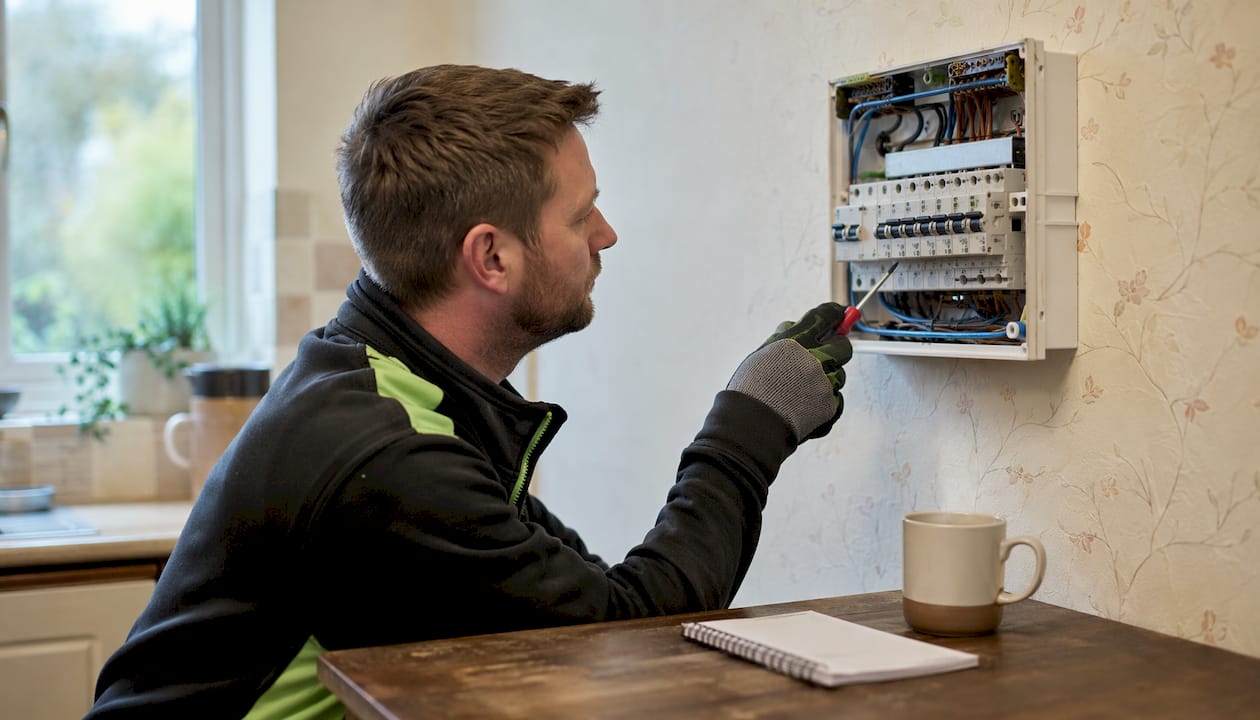
An EICR is not a visual walk-around. It is a formal safety assessment that tests the condition of a property’s fixed electrical installation against BS 7671, the UK wiring regulations standard. The electrician will test circuits under load, inspect the consumer unit, check RCD (residual current device) operation, verify earthing and bonding, and examine accessories such as sockets, switches, and light fittings throughout the property.
What you receive at the end:
- A formal written EICR document, signed and certified by the inspecting electrician
- Condition codes for every item inspected (C1, C2, C3, or FI — explained below)
- Photographic evidence of any defects found
- Recommendations for remedial work, prioritised by urgency
The distinction between a full EICR and a so-called “electrical health check” or visual inspection matters enormously. A visual check has no standardised format, carries no legal weight, and will not satisfy a landlord’s compliance obligation. A full documented EICR takes longer to compile and typically adds £50–£100 to the base fee, but it is the only document that counts.
What do condition codes C1, C2, C3, and FI mean?
The condition codes on an EICR are the most important part of the report. They tell you what needs fixing, how urgently, and what the likely cost implications are.
C1 — Danger present. The electrician is required to make the installation safe before leaving the property. This is not optional. A C1 finding means an immediate hazard exists: exposed live conductors, failed earthing, or a fault that poses a direct risk of electric shock or fire. Remedial work is mandatory and immediate.
C2 — Potentially dangerous. The installation is not immediately dangerous but could become so. Landlords receiving a C2 must arrange remedial work within 28 days (or a shorter period if specified by the local authority). Homeowners are strongly advised to act promptly. Common C2 findings include inadequate RCD protection, deteriorated wiring insulation, and overloaded circuits.
C3 — Improvement recommended. The installation is safe but does not meet current best practice. There is no legal obligation to act on a C3, but addressing it at the next convenient opportunity is sensible. Many older properties carry several C3 codes without failing the inspection overall.
FI — Further investigation required. Something could not be fully assessed during the inspection, often because of concealed wiring or inaccessible sections. An FI does not mean the installation is dangerous, but it does mean a follow-up inspection of that element is needed before a clean report can be issued.
A property with only C3 codes receives a “Satisfactory” overall result. Any C1 or C2 makes the result “Unsatisfactory,” and remedial work is required before the report can be reissued as satisfactory.
What drives the cost of an electrical inspection up or down?
Three primary factors determine where your quote lands: property size, number of circuits, and accessibility of the electrical systems. Everything else is secondary, but the secondary factors add up.
- Number of circuits: A 1-bed flat might have 6–8 circuits; a 5-bed house could have 20 or more. Each circuit requires individual testing, so more circuits means more time and a higher fee.
- Consumer unit access: If the consumer unit is behind a fitted wardrobe, under the stairs with stored items blocking it, or in a locked outbuilding, expect an accessibility surcharge of roughly £25–£75.
- Property age: Homes built before 1990 often have legacy wiring (rubber-insulated cables, old fuse boards) that requires broader checks and takes longer to assess safely.
- Report format: A verbal summary costs less than a full written EICR with photographic documentation. The documented version typically adds £50–£100 to the base fee.
- Accreditation level: Highly accredited contractors command higher rates, but they also carry the insurance and certification that makes the report legally valid.
- Rush bookings: Same-day or next-day appointments often attract a premium. Booking a week or two ahead is almost always cheaper.
Pro Tip: Clear the area around your consumer unit and any loft hatches before the electrician arrives. This simple preparation can shave time off the visit and avoid accessibility surcharges.
What are the landlord legal requirements for electrical inspections?
Landlords in England have a statutory duty to have a valid EICR in place for every rented property, with inspections required every five years. Scotland has equivalent requirements under separate legislation. Wales follows a similar framework. The rules apply to both new and existing tenancies.
What landlords must keep and provide:
- A copy of the current EICR, supplied to each tenant within 28 days of the inspection
- A copy provided to any prospective tenant who requests one within 28 days
- A copy provided to the local housing authority within 7 days of a request
If the report is “Unsatisfactory” (any C1 or C2 finding), landlords must arrange and complete remedial work within 28 days, or sooner if the report specifies. Written confirmation that the work has been completed must then be provided to tenants and the local authority.
Penalties for non-compliance are enforced by local housing authorities and can reach up to £30,000 per breach. That figure makes the cost of an EICR look very modest by comparison. The landlord EICR compliance guide on the Centralec-electrical site covers the documentation steps in detail.
How long does an electrical inspection take?
The duration of an electrical inspection varies by property size and complexity, typically ranging from a couple of hours for small flats to a full day for large properties with complex installations.
The electrical safety inspection checklist gives a useful breakdown of what the electrician will work through on site. The main time variables are:
- Number of circuits to test
- Accessibility of the consumer unit and sub-boards
- Whether any circuits require extended testing due to suspected faults
- Time needed to compile the written report (sometimes done off-site)
Simple preparations cut time and cost. Clear the area around the consumer unit, unlock any outbuildings, and make sure loft hatches are accessible. If the electrician cannot reach a section of the installation, they will log it as FI, which means a return visit.
Who should carry out your electrical inspection?
Only a competent person registered with a recognised scheme should carry out an EICR. In practice, that means an electrician registered with NICEIC, NAPIT, or an equivalent government-approved scheme. Registration is not just a quality signal; it is what makes the report legally valid for landlord compliance purposes.
What to verify before booking:
- Ask for the electrician’s NICEIC or NAPIT registration number and check it on the scheme’s online register
- Confirm they will issue a formal, signed EICR document (not a verbal summary or a generic checklist)
- Check that they carry public liability insurance
- Ask whether they are familiar with the property type (older properties, HMOs, and commercial premises each have specific requirements)
Low-cost providers sometimes offer visual-only or abbreviated checks that do not meet EICR standards. The price difference between a proper EICR and a visual check can be as little as £30–£50, but the legal and safety gap is enormous.
What do common remedial works cost after an EICR?
Remedial costs vary more than inspection costs, and they catch many homeowners and landlords off guard. Minor repairs such as replacing a damaged socket or fitting a new switch typically cost tens to a couple of hundred pounds. Larger jobs are a different matter.
| Remedial job | Typical UK cost range |
|---|---|
| Replacing a socket or switch | £50–£120 |
| Adding RCD protection to a circuit | £150–£350 |
| Consumer unit replacement | £400–£800 |
| Partial rewire (one floor or section) | £1,000–£3,000 |
| Full house rewire | £2,500–£6,000 |
A consumer unit replacement is the most common significant finding in properties with older fuse boards. It is also the job most likely to be flagged as C2, meaning landlords have 28 days to act. The rewire vs consumer unit upgrade guide explains when each option is appropriate.
A few practical points on managing remedial costs:
- Ask whether the inspecting electrician can quote for remedial work at the same visit. Combining inspection and repair with one contractor often reduces the total bill.
- Check whether your home insurance covers electrical defects found during inspection. Some policies include a contribution towards urgent remedial work.
- For older homes, a full inspection is usually better value than a targeted one, because legacy wiring often requires broader checks that a partial assessment would miss.
How to get reliable quotes and spot red flags
Getting three quotes is standard advice, but comparing them only on headline price is where people go wrong. A £90 quote for a 3-bed house inspection should raise questions, not excitement.
A short checklist for collecting comparable quotes:
- Ask for the electrician’s NICEIC or NAPIT registration number upfront
- Confirm the quote covers a full written EICR, not a visual check or abbreviated report
- Ask whether remedial work will be quoted separately or included in the inspection fee
- Clarify whether VAT and call-out fees are included in the figure
- Check the report turnaround time (some contractors take 1–2 weeks to issue the written document)
Red flags to watch for: language like “electrical health check” or “visual inspection” instead of EICR; no mention of accreditation; a fixed flat fee with no scope clarification; and any contractor who cannot tell you which scheme they are registered with. The safety and compliance documentation guidance is a useful reference for understanding what a proper report should contain.
Pro Tip: Ask specifically: “Will you issue a formal EICR signed by a registered electrician, and will it include photographic evidence of any defects?” A contractor who hesitates or deflects is telling you something important.
Key takeaways
A standard UK EICR costs £80–£400 depending on property size, with landlords legally required to renew every five years and facing penalties of up to £30,000 for non-compliance.
| Point | Details |
|---|---|
| Budget for the full picture | Inspection costs £80–£400; always add a contingency for remedial work, which can far exceed the inspection fee. |
| Landlord compliance is non-negotiable | EICRs are required every five years for rented properties in England; penalties reach up to £30,000 per breach. |
| Accreditation is the key quality check | Only NICEIC or NAPIT-registered electricians can issue a legally valid EICR; always verify registration before booking. |
| Preparation reduces cost | Clearing access to the consumer unit and loft hatches avoids accessibility surcharges of £25–£75. |
| Centralec-electrical for transparent pricing | Centralec-electrical provides fixed upfront quotes, full written EICRs, and NICEIC-approved inspections across the South West. |
Why accreditation and transparent pricing actually matter
The conventional wisdom on electrical inspections is that any qualified electrician will do. That framing misses the point. The difference between a competent registered electrician and someone offering a cheap visual check is not just a matter of price or paperwork. It is the difference between a document that stands up legally and one that does not, between a report that identifies a C1 hazard before it causes a fire and one that misses it entirely.
What strikes me about the way many homeowners approach this is the focus on finding the lowest quote. An EICR is one of the few professional services where the cheapest option carries a genuinely disproportionate risk. A £90 visual check on a 1970s property with rubber-insulated wiring is not a bargain. It is a liability.
The other thing worth saying plainly: a full written EICR with photographic evidence is not just a compliance document. It is a record that protects you at resale, at insurance claim time, and in any dispute with a tenant. Landlords who treat it as a box-ticking exercise tend to discover its value only when something goes wrong.
Centralec-electrical’s approach, with NICEIC approval and upfront fixed pricing, reflects what a proper inspection service should look like. No hidden charges after the visit, no vague verbal summaries, and no ambiguity about what the report covers.
Centralec-electrical: fixed-price EICRs with no surprises
The real cost of a cheap inspection is not the £90 you saved. It is the C2 fault that was missed, the landlord penalty that followed, or the insurance claim that was rejected because the report did not meet BS 7671 standards.

Centralec-electrical carries out full written EICRs for homeowners and landlords across the South West, with upfront fixed pricing that includes VAT and a formal signed report. As a NICEIC-approved contractor, every inspection meets the legal standard required for landlord compliance, and every report includes photographic evidence of any defects found. If remedial work is needed, the team can quote for it at the same visit, so there are no return-visit delays and no separate call-out fees.
Landlords combining an EICR with other electrical upgrades, including EV charger installation, can often reduce the total cost by booking both at once. Get a fixed quote for your EICR inspection today.
Useful sources and further reading
The figures and legal requirements in this guide draw on the following authoritative sources:
- Electrical Safety Standards in the Private Rented Sector — GOV.UK
- Fire Statistics Data Tables — GOV.UK
- Electrical Installation Condition Reports — Centralec-electrical
- What Does an EICR Check in a Property? — Centralec-electrical
- Landlord EICR Compliance Guide — Centralec-electrical
This article provides general information about electrical inspection costs and landlord compliance in the UK. It is not a substitute for professional electrical advice or legal guidance. Confirm current regulations with GOV.UK or a qualified electrician for your specific situation.