 Skip to content
Electrical inspections fail primarily because of identifiable safety violations and code breaches, not mysterious technicalities. The most common reasons include missing GFCI protection, improper cable securing, poor panel labelling, and blocked working clearances around consumer units. These failures carry real consequences: shock risk, fire hazard, and a failed certificate that delays your sale, tenancy, or building sign-off. Knowing what will fail an electrical inspection before the inspector arrives puts you in control. This guide covers every major failure category, explains the code behind each one, and gives you a practical preparation plan.
What are the most common electrical inspection failures?
Missing or non-functional GFCI protection is the single most cited reason for a first-pass failure in 2026. GFCI stands for Ground Fault Circuit Interrupter. It cuts power within milliseconds when it detects a ground fault, preventing electrocution in wet areas such as kitchens, bathrooms, and garages. An inspector will test every GFCI outlet and trip the breaker. If one fails to respond, the circuit fails.
The second cluster of failures involves physical wiring defects. Cables must be secured at regular intervals and protected where they pass through timber framing. Nail plates are mandatory when cables run within 1.5 inches of a stud face. Without them, a drywall screw can pierce the cable and create a live fault hidden inside the wall. Inspectors treat missing nail plates as evidence of poor workmanship, which raises scrutiny across the entire installation.
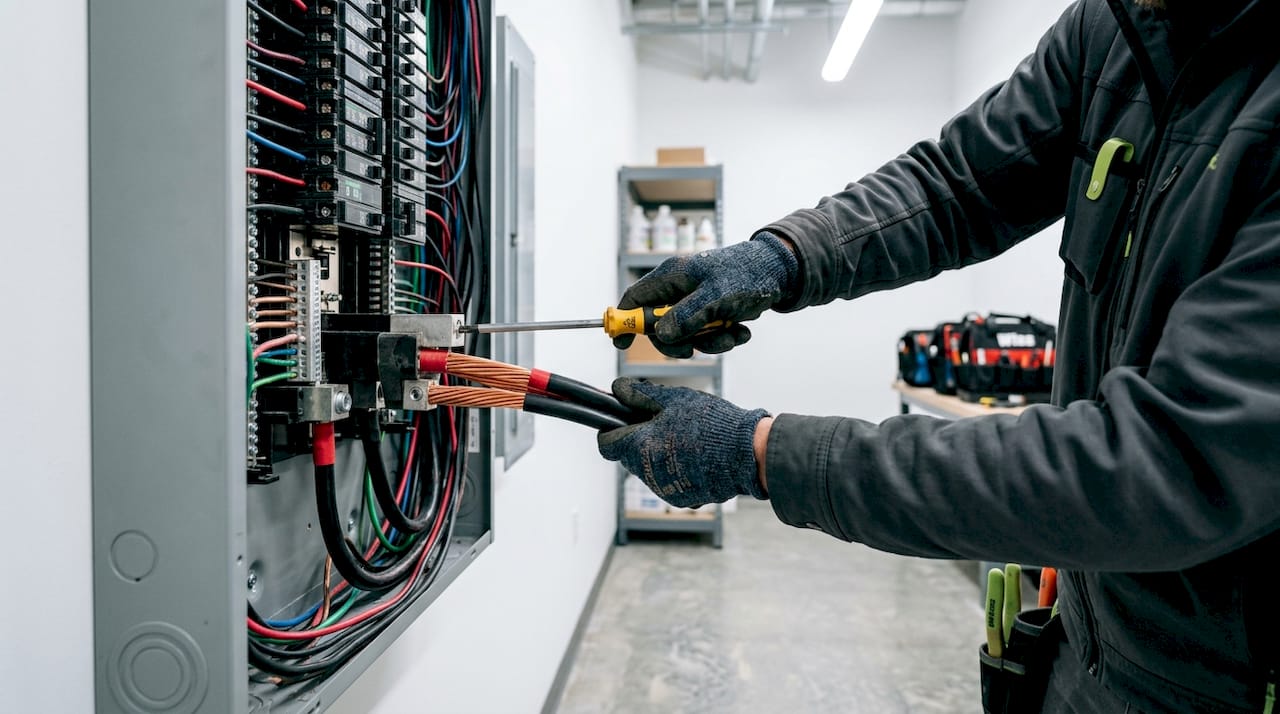
Box fill violations are a third common failure. NEC 314.16 requires that every conductor, device, and grounding wire is counted against the rated volume of the junction box. Cramming too many wires into a box overheats connections and increases fire risk. This is a preventable error that a simple calculation catches before the inspector arrives.
Other frequent failures include:
- Open knockouts on consumer units and junction boxes, which expose live components
- Missing tamper-resistant receptacles in locations required by code, particularly where children may be present
- Wire gauge mismatches, where a cable is too thin for the breaker protecting it
- Grounding and bonding faults, including missing earth connections on metal pipework and consumer unit enclosures
- Illegible or vague circuit labels on the consumer unit directory
Pro Tip: Carry a receptacle tester when doing your pre-inspection walkthrough. It identifies wiring faults, missing earth connections, and reversed polarity in seconds, without opening a single box.
How do wiring and circuit breaker issues cause inspection failures?
Wire gauge and breaker size must match. A 2.5mm² cable on a 32A breaker is an electrical code violation because the cable will overheat before the breaker trips. The breaker is supposed to protect the cable, not the other way around. Inspectors check this pairing on every circuit, and a mismatch is an automatic failure.
Improper torqueing of terminations is a less obvious but equally serious problem. NEC 110.14(D) requires that conductors are tightened to the torque value specified by the manufacturer. A loose connection arcs under load, generating heat that can ignite surrounding materials. Inspectors now carry torque screwdrivers and check connections at the consumer unit and at key termination points. This is not a detail you can skip.
AFCI (Arc Fault Circuit Interrupter) breakers are required in bedrooms and living spaces under current code. Many older properties and recent DIY alterations lack them entirely. An AFCI breaker detects the electrical signature of an arc fault, which a standard breaker cannot detect, and shuts the circuit down before a fire starts. Missing AFCI protection in required locations is a straightforward failure point.
Subpanel wiring produces its own set of failures. The most common is incorrect bonding of the neutral and ground at a subpanel. In a main panel, neutral and ground are bonded together. In a subpanel, they must be kept separate. Combining them in a subpanel creates a parallel return path for current, which is a shock hazard. Inspectors check this specifically.
Double tapping, where two conductors are connected to a single breaker terminal not rated for it, is another common fault. Most breakers accept only one conductor. Double tapping creates a loose connection and an overloaded terminal. It is also a clear sign of unpermitted work, which triggers wider scrutiny.
Pro Tip: If your consumer unit has any breakers with two wires under a single terminal, flag it before the inspection. A qualified electrician can fit a tandem breaker or add a subpanel to resolve it correctly.
What role do panel clearances and labelling play in inspection outcomes?
NEC 110.26 mandates a clear working space in front of every consumer unit: at minimum 30 inches wide and 36 inches deep, free from any obstruction. This space must be accessible at all times. A water heater, shelving unit, or stored boxes placed in front of the panel is an automatic failure. The rule exists so that an electrician or emergency responder can work safely without obstruction.
Many homeowners are surprised to learn that this clearance applies even in finished rooms. A built-in wardrobe installed over a consumer unit fails the inspection regardless of how tidy the wiring inside looks. The fix requires relocating either the panel or the obstruction, which is a significant job if caught late.
Panel circuit labelling must be clear, durable, and specific. “Upstairs” is not acceptable. “Bedroom 1 sockets” is. Inspectors require that every breaker has a printed or clearly written label that identifies the exact circuit it controls. Handwritten labels in pencil that have faded are a top five failure cause. The directory card inside the panel door must be complete and legible.
The table below shows the most common panel-related failures and what the code requires:
| Failure | Code requirement |
|---|---|
| Blocked working clearance | 30 inches wide, 36 inches deep, unobstructed (NEC 110.26) |
| Vague circuit labels | Specific, durable, legible label for every breaker |
| Open knockout holes | Filled with approved blanks, not tape or cardboard |
| Missing panel directory | Complete circuit directory inside panel door |
| Inaccessible panel location | Panel must be reachable without removing fixed structures |
Filling unused knockout openings with proper blanks rather than tape is a detail that catches many homeowners out. Tape over a knockout is not an approved method. It affects the inspector’s overall perception of workmanship quality, which can increase scrutiny across the rest of the installation.
How can homeowners prepare to avoid failing an electrical inspection?
A thorough pre-inspection walkthrough can prevent the vast majority of common failures before the official visit. The walkthrough takes roughly ten minutes and requires no specialist tools beyond a receptacle tester and a tape measure. The goal is to catch the obvious failures before the inspector does.
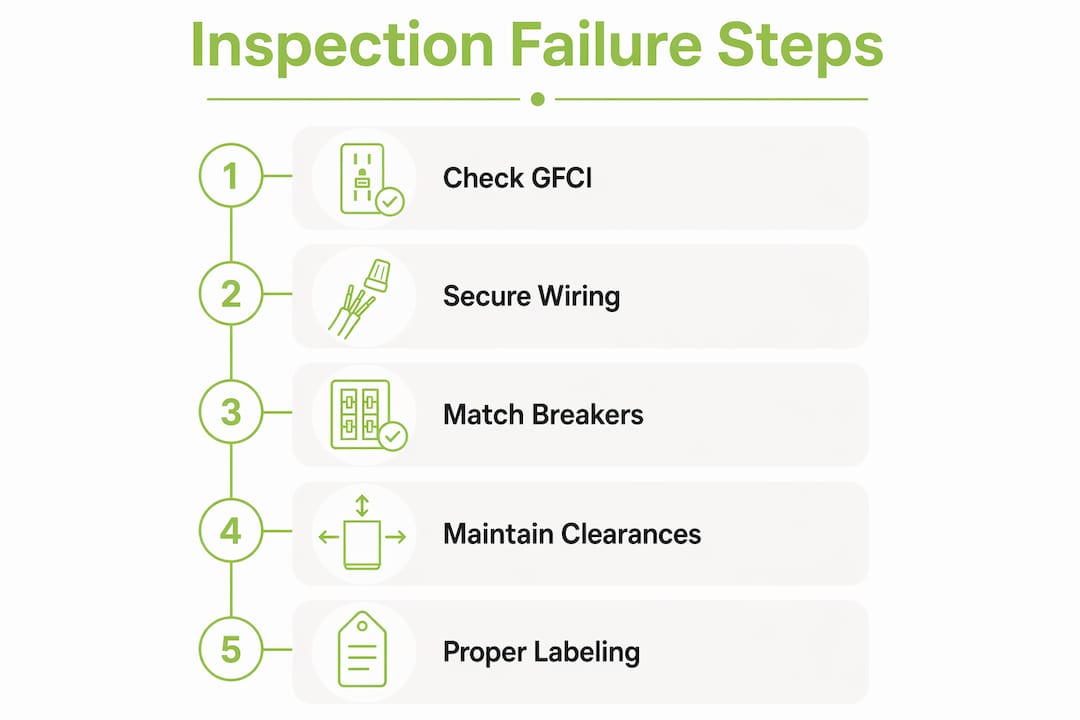
Work through this checklist before the inspection:
- Test every GFCI outlet using the test and reset buttons. A non-responsive outlet needs replacing before the inspection.
- Measure the working clearance in front of your consumer unit. Remove anything within 36 inches of depth and 30 inches of width.
- Check all junction box covers are fitted. Open boxes with exposed wiring are an immediate failure.
- Verify circuit labels on the consumer unit are specific, legible, and complete.
- Inspect cable runs for unsecured sections and confirm nail plates are fitted where cables pass through timber.
- Check for open knockouts on the consumer unit and any junction boxes. Fit approved blanks where needed.
- Confirm permits are in place for any recent work. DIY alterations without permits are a red flag that inspectors investigate thoroughly.
Documentation matters as much as the physical installation. An inspector who sees unpermitted work will examine everything more closely. Permits show that work was planned and approved, which builds confidence in the overall installation.
Learning to spot electrical faults early gives you time to fix problems before they become inspection failures. Properties can fail despite a clean appearance because of hidden issues such as borrowed neutrals and unsafe consumer unit configurations. A borrowed neutral, where a circuit uses the neutral from a different circuit, creates an imbalance that can cause shocks and is invisible without testing.
Pro Tip: Book a professional pre-inspection check with a NICEIC-approved electrician at least two weeks before your inspection date. This gives you time to fix any faults found without rushing.
Key takeaways
Failing an electrical inspection almost always comes down to a small number of identifiable, fixable violations that a pre-inspection walkthrough and professional check can catch in advance.
| Point | Details |
|---|---|
| GFCI protection is the top failure | Test every GFCI outlet before the inspection; non-functional units are an automatic fail. |
| Panel clearance is non-negotiable | Keep 30 inches wide and 36 inches deep clear in front of your consumer unit at all times. |
| Labels must be specific and legible | Every breaker needs a clear, durable label identifying the exact circuit it controls. |
| Wire gauge must match breaker size | A mismatch between cable rating and breaker amperage is an automatic code violation. |
| Permits protect your inspection outcome | Unpermitted DIY work triggers heightened scrutiny and frequently results in failure. |
What I have learned from 23 years of electrical inspections
After more than two decades of electrical work across the South West, the failures that surprise homeowners most are never the dramatic ones. Nobody is shocked when a burnt-out consumer unit fails. What catches people off guard is the panel label written in pencil that has faded to nothing, or the shelf unit that was installed six inches too close to the consumer unit. These are the failures that cost time and money because they feel so avoidable in hindsight.
The biggest myth I encounter is that a tidy installation is a compliant one. Neatness helps, but an inspector is not judging aesthetics. They are checking whether every connection is torqued correctly, every cable is protected, and every circuit is documented. A beautifully dressed cable run with a loose terminal at the consumer unit will fail just as surely as a messy one.
I also see homeowners underestimate the impact of DIY work on inspection outcomes. Even competent DIY electrical work, done without permits, puts the entire installation under scrutiny. An inspector who finds one unpermitted modification will look harder at everything else. The cost of a permit is always less than the cost of a failed inspection and a reinspection fee.
My consistent advice is to treat the pre-inspection walkthrough as a professional task, not a quick glance. Use a checklist, test every outlet, measure every clearance, and read every label. If anything is unclear, call a NICEIC-approved electrician before the inspection date. First-time passes are not luck. They are the result of preparation.
— Craig
Professional electrical support for a first-time pass
Preparing for an inspection is straightforward when you know what inspectors look for. Centralec-electrical has over 23 years of experience helping homeowners and property managers in the South West get their installations right before the inspector arrives.

Centralec-electrical’s domestic electrical services cover everything from pre-inspection fault correction to full rewires, with transparent pricing and no hidden costs. For landlords, an Electrical Installation Condition Report identifies every code violation before a formal inspection, giving you time to fix faults without the pressure of a deadline. Centralec-electrical is NICEIC approved, which means every job meets the safety and compliance standards that inspectors expect. If you are also planning an EV charger installation as part of a property upgrade, Centralec-electrical handles EV charger installation requirements from start to finish, fully compliant with current regulations.
FAQ
What is the most common reason for failing an electrical inspection?
Missing or non-functional GFCI protection is the top reason for first-pass failure. Inspectors test every GFCI outlet, and a single non-responsive unit fails the circuit.
How much clearance is required in front of an electrical panel?
NEC 110.26 requires a minimum of 30 inches wide and 36 inches deep, completely free from obstruction. Any object within that space is grounds for failure.
Can DIY electrical work cause an inspection failure?
Yes. Unpermitted DIY alterations are a red flag that triggers heightened scrutiny across the entire installation. Work done without permits frequently fails regardless of its physical quality.
What does an EICR check for in a property?
An EICR inspection assesses the condition of all fixed electrical wiring, identifies code violations, and flags safety hazards including grounding faults, overloaded circuits, and deteriorated insulation.
How can I prepare for an electrical inspection as a landlord?
Work through a pre-inspection checklist covering GFCI function, panel clearances, circuit labelling, and cable protection. Booking a professional condition report before the formal inspection gives you time to correct any faults found.