 Skip to content

What does a local electrical installation service actually cover?
A local electrical installation service is a certified electrician or contractor who carries out safe, compliant electrical work at your property. That covers everything from fitting a new consumer unit and rewiring a house to installing EV chargers, smart home systems, kitchen appliance circuits, and emergency repairs. Homeowners, landlords, and businesses all need these services at some point, and the key word in every case is certified.
Under Part P of the Building Regulations, significant electrical work in domestic properties in England and Wales must be carried out by a competent person or notified to Building Control. Hiring an uncertified handyman to do notifiable work is not just risky; it can invalidate your home insurance, cause problems when you sell, and leave you footing the bill for a Building Control inspection after the fact.

NICEIC-approved contractors sidestep that entirely. Because they operate under a Competent Person Scheme, they can self-certify compliance and issue the necessary certificates directly, saving you time and money. Centralec-electrical has held NICEIC Approved Contractor status for over 23 years, covering domestic, commercial, and rental properties across the South West.
What to expect from a reliable local provider:
- NICEIC approval with the ability to self-certify notifiable work
- Full compliance with BS 7671 (the IET Wiring Regulations), the national standard for all UK electrical installations
- Public liability insurance and cover for all works carried out
- Upfront, fixed pricing with no hidden costs
- Satisfaction guarantee on completed work
- 24/7 availability for emergency callouts
- Electrical Installation Condition Reports (EICR) for landlords and property sales
Pro Tip: Before you book anyone, check the NICEIC register. You can verify any contractor by postcode or company name using the NICEIC’s own search tool. If they do not appear, call NICEIC directly on 0333 015 6625 before proceeding.
Typical costs, timelines, and what the law requires
What services fall under electrical installation?
The scope is broader than most people realise. A qualified electrical installation service covers:
- Consumer unit (fuse board) upgrades
- Full and partial house rewiring
- EV charger installation (Wallbox, Zappi, Tesla, Autel, and others)
- Smart home wiring and lighting design
- Kitchen and appliance circuits
- Outdoor and garden electrics
- Commercial fit-outs and office rewiring
- EICR testing and certification for landlords
Emergency electrical installation is also part of the picture. Faults do not keep office hours, and a provider with 24/7 availability can prevent a minor fault from becoming a serious hazard.
How much does it cost?
Pricing varies by job complexity, property size, and location, but transparent, upfront pricing with no hidden fees is the standard you should hold every provider to. A simple socket or lighting circuit addition costs considerably less than a full rewire, which depends on the number of rooms and the age of the existing installation. EV charger installation sits in the mid-range for most domestic properties, though grants may reduce your outlay. Always get a written quote before work begins.
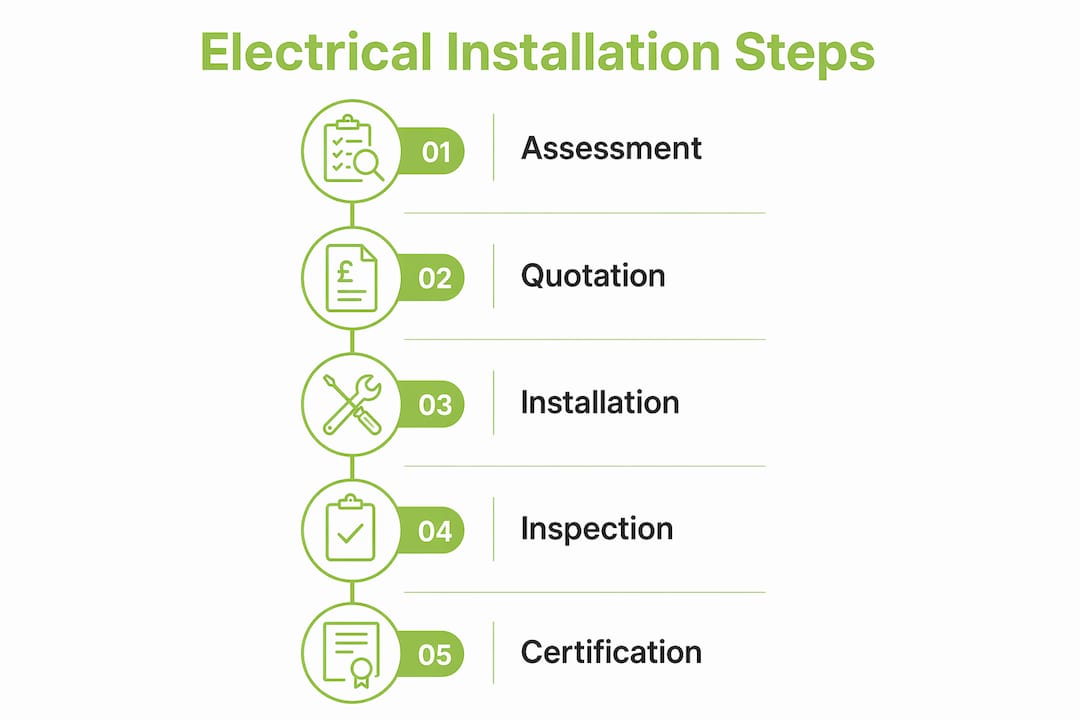
Prioritising the cheapest quote over certification is the most common mistake homeowners make. It tends to cost more in the long run, either through remedial work, failed inspections, or insurance complications.
How long will it take?
Small repairs and single-circuit additions can complete within a few hours. A consumer unit upgrade typically takes a day. Full house rewiring or an EV charger installation can run to several days, depending on the size of the property and access requirements. Your electrician should give you a realistic timeline before work starts, not after.
The NICEIC Platinum Promise
One protection that uncertified tradespeople simply cannot offer is the NICEIC Platinum Promise, which provides up to £25,000 of coverage to resolve unsafe or non-compliant work if a certified contractor fails to put things right. That is a meaningful safety net for any homeowner or business commissioning significant electrical work.
NICEIC also assesses its certified contractors regularly against BS 7671 and the Building Regulations, so certification reflects ongoing competence, not just a one-time check. NICEIC is the UK’s largest electrical certification body, with a large number of businesses on its register.
Pro Tip: Always ask for a warranty on completed work and confirm what post-installation support looks like before you sign anything. A reputable provider will answer both questions without hesitation.
Key takeaways
Hiring an NICEIC-approved electrician is the single most important decision you make when commissioning electrical work in the UK, covering legal compliance, insurance validity, and long-term safety.
| Point | Details |
|---|---|
| Part P compliance is mandatory | Notifiable domestic electrical work must be certified or reported to Building Control under Part P. |
| NICEIC approval enables self-certification | Approved contractors issue compliance certificates directly, saving time and inspection fees. |
| BS 7671 is the governing standard | All UK electrical installations must comply with the IET Wiring Regulations (BS 7671). |
| Platinum Promise covers up to £25,000 | NICEIC’s consumer protection scheme covers remedial costs if certified work is non-compliant. |
| Verify credentials before booking | Use the NICEIC search tool by postcode or company name to confirm any contractor’s registration. |

Centralec-electrical offers domestic electrical services across the South West, backed by NICEIC approval, fixed upfront pricing, and a satisfaction guarantee. Whether you need an EICR for a rental property, a full rewire, or an EV charger installed at home, the team is available 24/7 with no hidden costs.